
SEC
SEC and Big Ten still divided on CFP expansion entering key meeting
SEC and Big Ten leaders remain divided on College Football Playoff expansion, with a Jan. 18 meeting looming and no agreement in place.

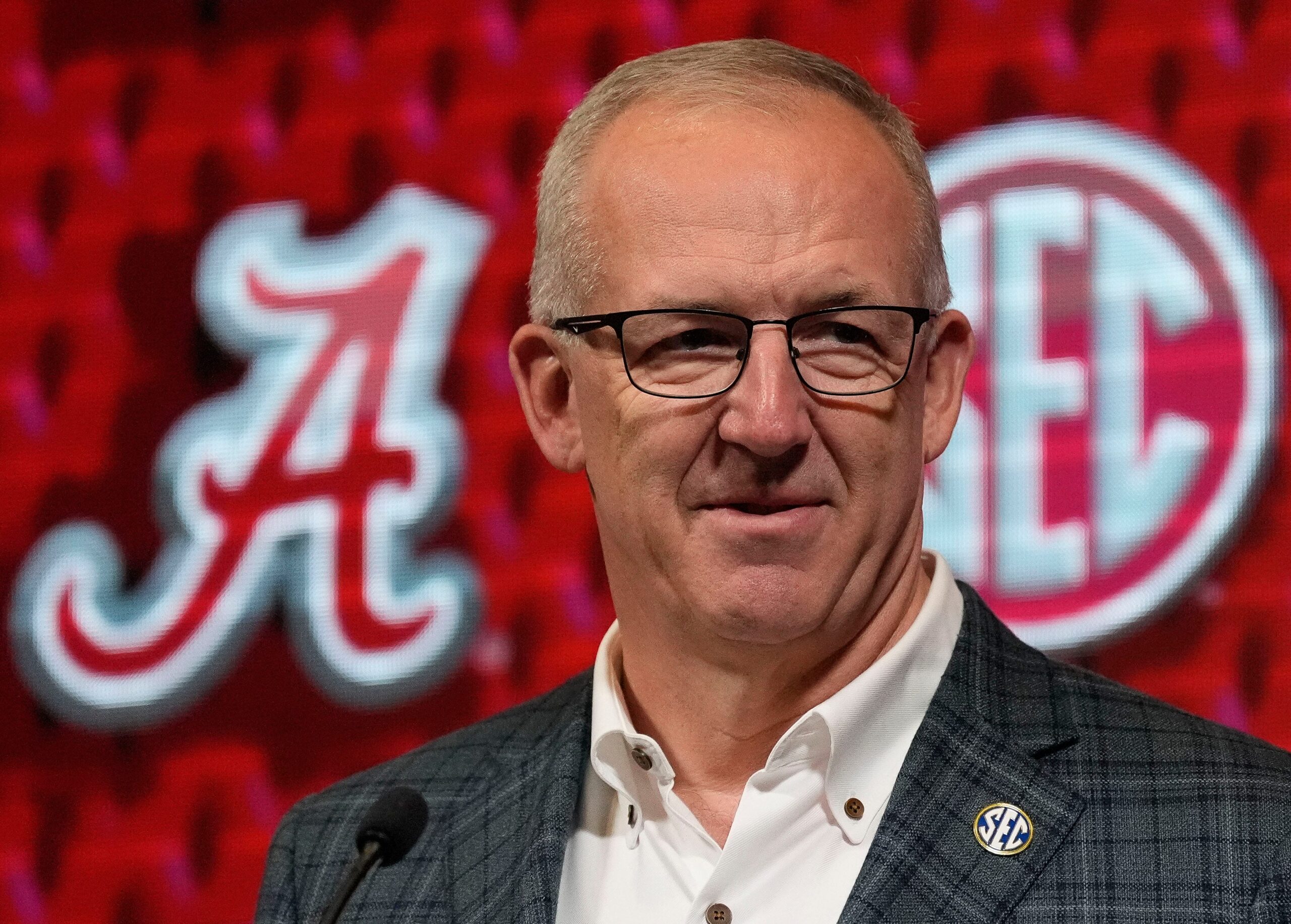
College football’s playoff future is once again stuck in neutral, and the people holding the keys can’t agree on which direction to go.
According to reporting by Heather Dinich of ESPN, the SEC and Big Ten are still not aligned on expanding the College Football Playoff, even with a critical Jan. 18 meeting scheduled in Miami.
That meeting will take place the day before the national championship game, a convenient time for everyone to be in the same room and a familiar moment for nothing to get resolved.
The current playoff is set at 12 teams through the 2025 season, and any change before 2026 requires unanimous agreement among the conferences. That agreement, at least for now, does not exist.
Deadlines have already been pushed back, conversations extended, and patience tested. Yet the same roadblock remains.
The SEC wants one thing. The Big Ten wants something else.
And college football waits.
The SEC’s position has been relatively clear. Commissioner Greg Sankey has said publicly that a 16-team playoff feels like the right next step for the sport.
Sixteen teams would expand access while still keeping the regular season meaningful, especially for leagues that believe their depth deserves more at-large consideration.
The Big Ten, however, is not interested in stopping at 16.
Commissioner Tony Petitti has made it clear that his league wants assurances that any move to 16 teams would eventually lead to a 24-team playoff.
That philosophical gap is the core issue.
The SEC views 16 as a destination. The Big Ten views it as a stepping stone.
Those ideas don’t line up, and that’s why the sport’s two most powerful conferences remain at odds.
SEC and Big Ten stuck in philosophical standoff
This disagreement isn’t just about numbers. It’s about control and direction.
Under one proposed 16-team format, five conference champions would receive automatic bids, with the remaining 11 spots filled by at-large teams.
That model aligns well with the SEC’s belief that its teams would consistently earn those at-large selections.
But discussions become more complicated when automatic access for Group of 5 conferences is questioned.
As Dinich reported, excluding guaranteed spots for those leagues “isn’t going to fly,” creating yet another hurdle in an already tangled debate.
Even if the SEC and Big Ten could agree on size, they still haven’t settled how teams would qualify.
That’s why expansion talks keep circling without landing.
The Jan. 18 meeting in Miami was expected to bring clarity, but expectations remain tempered.
If no deal is reached by Jan. 23, the playoff format will remain unchanged at 12 teams for the 2026 season.
That outcome is increasingly realistic.
The SEC and Big Ten now share increased influence over the CFP, a structure designed to streamline decision-making.
Instead, it has produced a stalemate.
Jan. 18 meeting looms, but resolution remains uncertain
The irony is hard to miss.
College football has never had more money, more power conferences, or more postseason interest — yet it struggles to agree on how many teams should play for the title.
Ratings remain strong. Interest remains high. But progress remains slow.
Bowl games also factor into the hesitation, as more playoff games could reduce the value of traditional postseason matchups.
Administrators continue to weigh growth against tradition, even as fans clamor for clarity.
For now, the future of the playoff depends on whether the SEC and Big Ten can find common ground they’ve yet to reach.
As Heather Dinich detailed, expansion isn’t being blocked by lack of interest. It’s being blocked by competing visions from the sport’s biggest power brokers.
Until that changes, the playoff stays where it is — powerful, profitable, and unresolved.
Key takeaways
- SEC and Big Ten remain divided on CFP expansion ahead of Jan. 18 meeting
- SEC supports a 16-team playoff; Big Ten wants a path to 24 teams
- Without agreement by Jan. 23, the playoff will remain at 12 teams for 2026



Tennessee turns to portal again as secondary questions won’t go away

Alabama loses defensive starters to Ohio State, fueling uneasy offseason talk

