
LSU
Sam Leavitt’s LSU commitment fuels another SEC transfer standoff
Sam Leavitt’s LSU commitment sparks SEC transfer drama as Tennessee stays involved and quarterback market values continue to rise.

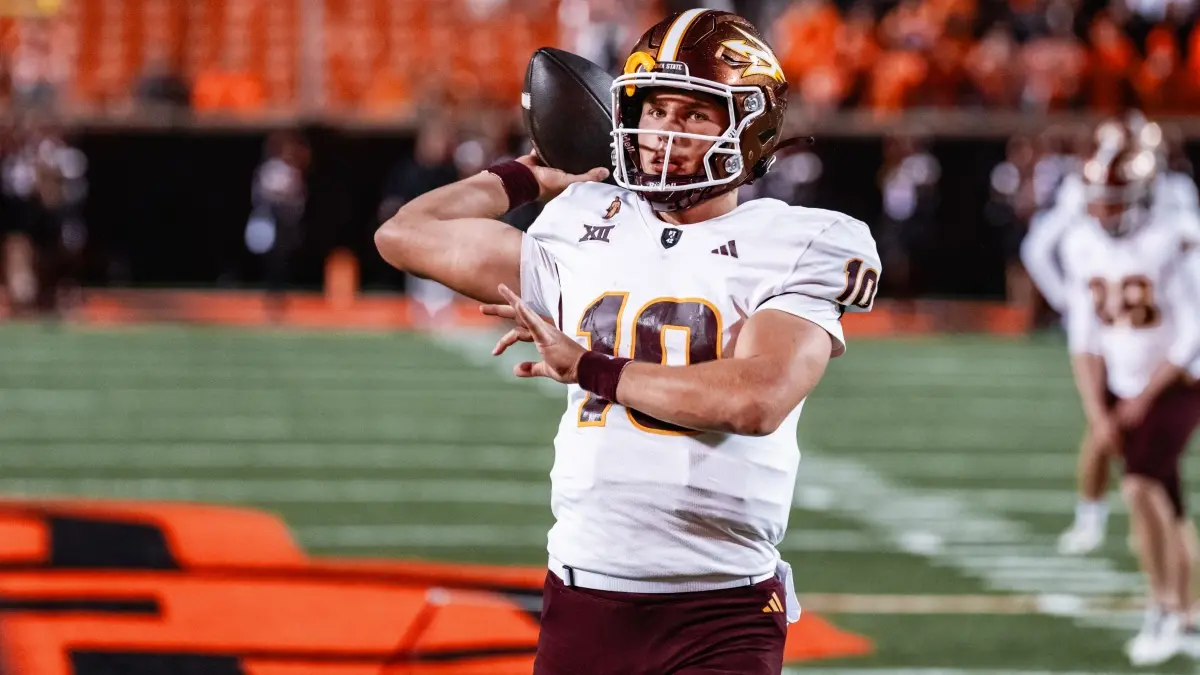
BATON ROUGE, La. — Sam Leavitt committed to LSU, and in the modern SEC, that sentence comes with an asterisk, a footnote and at least one frantic phone call from a rival staff.
The former Arizona State quarterback announced his verbal pledge to the Tigers after a busy tour of campuses that included LSU, Tennessee and Miami.
On paper, that should’ve wrapped it up. In reality, it kicked off another transfer-portal standoff that feels less like recruiting and more like a silent auction.
Leavitt isn’t just another name floating through the portal. He arrives with real credentials putting more than 4,500 passing yards, a conference title and a College Football Playoff appearance.
That résumé explains why half the SEC suddenly found room in its budget — and its quarterback room — to take his calls.
LSU landed the commitment first. That much is clear. What isn’t clear is whether the Tigers landed the final word.
According to reporting cited by BroBible, Tennessee remained in contact with Leavitt’s camp even after the commitment went public. The Volunteers, notably, were not informed ahead of time that LSU was about to get the nod.
That’s how transfer drama works now. Everyone thinks they’re still in it until they find out on social media that they’re not — or maybe still are.
Pete Nakos of On3 Sports reported that Tennessee and Leavitt’s camp stayed in regular contact throughout the day of the announcement, adding that the Volunteers “were never told he was going to LSU.”
The SEC translation is that means nobody’s closing the door just yet.
In another era, a verbal commitment might’ve cooled things off. In this one, it just turns up the heat.
Quarterbacks now come with price tags, not just playbooks
Leavitt’s recruitment also highlights the uncomfortable truth college football keeps trying to pretend is new: quarterbacks cost real money now.
BroBible notes recent examples across the sport, including Brendan Sorsby’s reported $5 million deal at Texas Tech and Ty Simpson drawing figures north of $6 million just to consider staying put.
Against that backdrop, Leavitt’s market value has reportedly landed in the $4 million to $5 million range.
That’s not speculation pulled from message boards. That’s the going rate when experienced quarterbacks with postseason résumés hit the open market.
For LSU, this is familiar territory. The Tigers have shown a willingness to spend aggressively to stabilize the most important position on the field.
For Tennessee, the motivation is just as clear. The Volunteers need certainty at quarterback, and certainty now has a price tag attached.
This isn’t recruiting leverage anymore. It’s negotiating power.
And Leavitt has plenty of it.
Tennessee’s interest refuses to fade quietly
From Tennessee’s perspective, the timing didn’t add up. The Volunteers had hosted Leavitt, stayed in touch with his camp and believed discussions were ongoing when LSU’s commitment news surfaced.
That explains why Tennessee hasn’t publicly conceded anything. Until paperwork is signed and enrollment paperwork is processed, the door remains cracked open — even if LSU’s logo is already stamped on the announcement graphic.
The Vols’ quarterback situation remains unsettled, and Leavitt represents the type of experienced option programs chase when patience runs thin. In a conference where one missed season can trigger wholesale change, waiting rarely feels like an option.
So Tennessee waits, but not quietly.
And LSU, despite holding the commitment, knows the job isn’t finished until it is.
Transfer portal commitments come with expiration dates
What Leavitt’s situation underscores is how fragile verbal commitments have become in the transfer-portal era. The process now looks less like traditional recruiting and more like free agency without contracts.
Players explore. Programs pitch. Numbers are exchanged. Announcements are made. And sometimes, nothing actually ends.
The SEC has embraced this reality faster than most leagues, and it shows. Quarterbacks move. Collectives mobilize. Fan bases refresh timelines every 10 minutes.
Leavitt’s commitment fits neatly into that ecosystem. LSU gets the headline. Tennessee keeps calling. Everyone waits to see who blinks first.
It’s not chaos by accident. It’s chaos by design.
Waiting is now part of the process
For now, Sam Leavitt is committed to LSU. That’s the official stance, and it may hold. But the fact Tennessee remains engaged tells you everything about how modern college football operates.
Nothing is final until it’s signed, enrolled and taking snaps.
Until then, this is just another chapter in the SEC’s offseason tradition: quarterback drama with million-dollar stakes and no clean ending in sight.
Key takeaways
- Sam Leavitt’s LSU commitment doesn’t appear to have ended Tennessee’s pursuit
- The transfer-portal quarterback market now routinely reaches multimillion-dollar valuations
- Verbal commitments carry far less finality in the modern SEC landscape



Tennessee turns to portal again as secondary questions won’t go away

Alabama loses defensive starters to Ohio State, fueling uneasy offseason talk

