
Ole Miss
SEC headache grows as Chambliss drags NCAA into Mississippi court
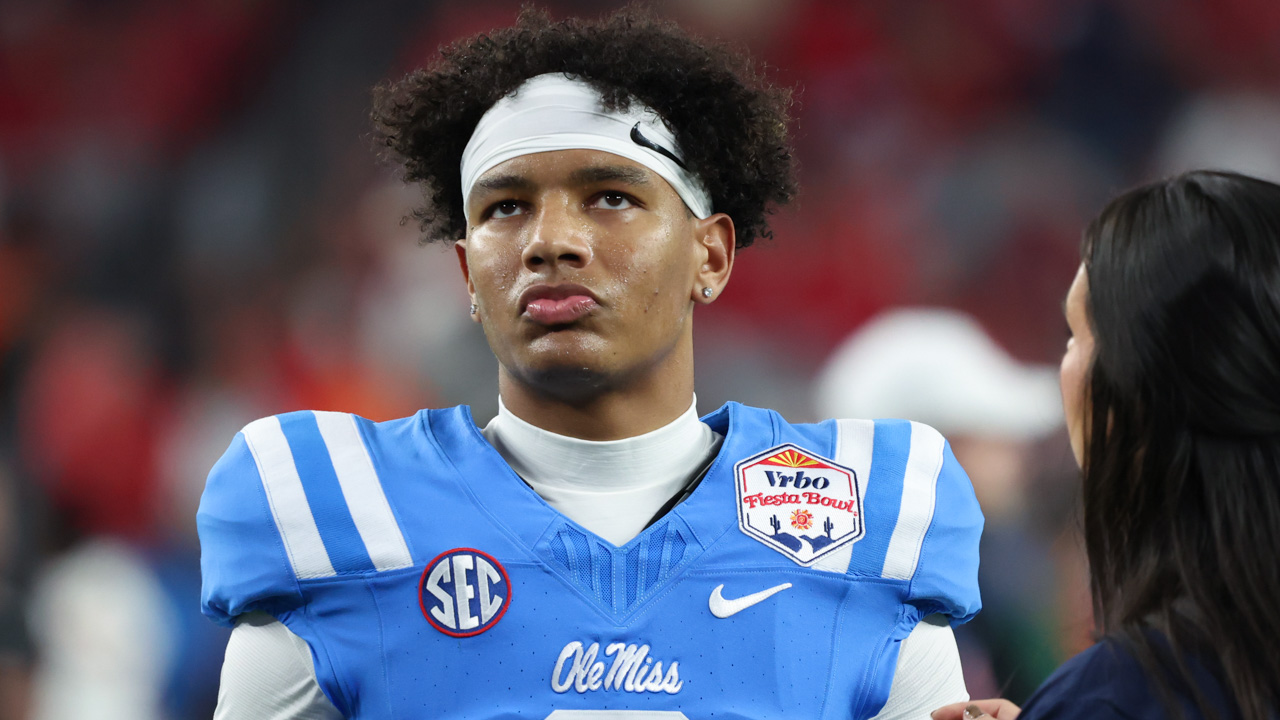
The NCAA denied Trinidad Chambliss’ waiver, and now the Ole Miss quarterback is asking a Mississippi judge to step in.

The NCAA spends a lot of time reminding the SEC it’s in charge. It’s a constant source of humor for everyone.
It writes the rulebook, enforces the bylaws, and hands down eligibility decisions like stone tablets from Indianapolis. This week, though, the NCAA finds itself staring at something far more intimidating than a compliance memo.
Mississippi lawyers with an Arkansas lawyer helping them that has a better record than teams from the SEC in the playoffs lately.
Ole Miss quarterback Trinidad Chambliss, fresh off one of the most unlikely and productive seasons in SEC history, is taking the NCAA to state court.
His attorneys plan to file a lawsuit seeking a preliminary injunction that would allow him to play in 2026 after the NCAA denied his request for a sixth year of eligibility.
For SEC fans, this feels familiar. When the rulebook collides with reality, someone eventually calls a lawyer.
Chambliss’ rise was fast, loud, and very SEC. The former Division II quarterback transferred from Ferris State and promptly became the engine behind Ole Miss’ 13-2 season, a College Football Playoff semifinal appearance, and his own eighth-place finish in the Heisman Trophy voting.
He threw for 3,937 yards and 22 touchdowns, became the face of the Rebels’ playoff run, and entered the offseason expecting to return for another year under first-year coach Pete Golding.
Then the NCAA said no.
When paperwork beats production
The NCAA denied Chambliss’ waiver request Friday, citing a lack of sufficient contemporaneous medical documentation related to respiratory issues he dealt with while at Ferris State.
In NCAA-speak, that means the football was great, the story was compelling, but the paperwork didn’t cooperate.
That denial didn’t just affect depth charts. It potentially wiped out a future that included a signed deal that could have paid Chambliss more than $6 million with incentives if he returned to Ole Miss.
Instead of quietly accepting the ruling or heading straight to the NFL draft, Chambliss and his legal team chose confrontation.
Tom Mars, his attorney from Arkansas, said the lawsuit will be filed in Mississippi state court and will seek both a preliminary and permanent injunction against the NCAA.
Mars said the complaint is expected to be far more detailed and documented than other eligibility lawsuits.
Mars noted that most of the weekend following the denial was spent preparing the filing and that the suit is expected to be submitted later this week.
This isn’t just any legal pairing, either.
Mars is joined by Mississippi trial lawyer William Liston, who also happens to be the founder and general counsel of Ole Miss’ NIL collective.
In the SEC, even the legal fights have home-field advantage.
The SEC watches closely
Here’s where this stops being just an Ole Miss issue and starts becoming an SEC one.
The conference has long viewed the NCAA’s eligibility process as inconsistent at best and arbitrary at worst.
Waivers are granted, denied, reversed, and appealed with logic that sometimes feels more artistic than scientific.
Chambliss’ camp is betting that a Mississippi judge may be more receptive to his situation than an NCAA review committee.
At the same time, Ole Miss is still appealing the decision within the NCAA’s normal channels. Yes, they’re doing both.
It’s the administrative equivalent of challenging a call while also filing a grievance with the league office.
From the SEC perspective, this case matters because it could establish a roadmap. If a state court grants an injunction allowing Chambliss to play, the floodgates may open.
Other players, other programs, and other conferences would suddenly have a new playbook for fighting eligibility rulings.
The NCAA, meanwhile, would be left defending its authority not just in press releases, but in courtrooms across the country.
Bigger than one quarterback
Chambliss’ case is about one season, one player, and one waiver denial. But it’s also about control.
The NCAA insists its rules exist to protect competitive balance and athlete welfare.
The SEC, increasingly empowered by playoff access, NIL money, and star power, keeps asking why those rules feel so inflexible when real lives and real careers are involved.
Chambliss nearly took Ole Miss to the national title game. He became one of the most visible quarterbacks in the country.
And yet, his future hinges not on performance or health, but on whether enough paperwork from years ago meets today’s standard.
That disconnect is why this lawsuit resonates beyond Oxford.
Whether the judge grants the injunction or not, the NCAA is once again defending itself in a courtroom instead of a committee room. And the SEC, as usual, is at the center of the storm.
If Chambliss wins, it’s a precedent. If he loses, it’s another reminder that in college football, even the biggest stars are still at the mercy of the smallest footnotes.
Either way, this fight isn’t over. It’s just moved from the replay booth to the courthouse.
Key takeaways
- Trinidad Chambliss’ lawyers are filing a lawsuit in Mississippi seeking an injunction to secure his 2026 eligibility
- The NCAA denied his waiver request due to insufficient medical documentation from his time at Ferris State
- The case could have broad implications for how future SEC eligibility disputes are handled



Tennessee turns to portal again as secondary questions won’t go away

Alabama loses defensive starters to Ohio State, fueling uneasy offseason talk

